
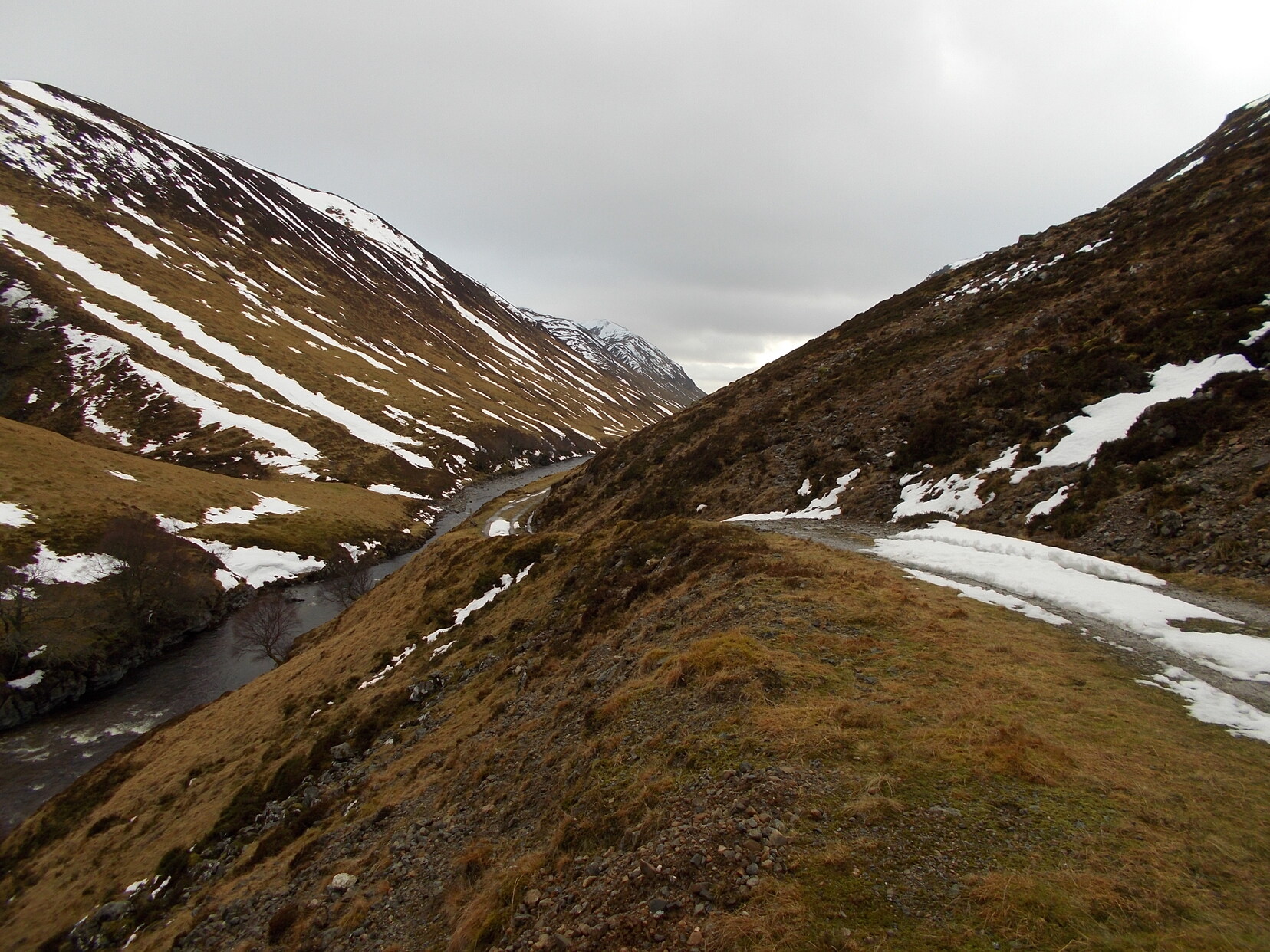
Heritage Path of the Month.
In celebration of the James Hutton Tercentenary*, Glen Tilt is our Heritage Path of the Month for June 2026.
More about Glen Tilt:
Starting at the Linn of Dee, from here to the Geldie Burn a good estate track exists. At the Geldie Burn there is no longer any bridge. After this serious river crossing, a rougher track and footpath (avoiding further river crossings) leads to the ruins of Bynack Lodge. From there a track leads on for about 1km then becomes a footpath leading as far as the watershed. From there, a clear path leads to just south of the Bedford Memorial Bridge at the Falls of Tarf where a reasonable estate track is met. This continues to Auchgobhal where this old right of way rises out of the glen as a grassy track until Kincraigie farm from where a farm road and tarred public road lead to Blair Atholl.
This route is a serious undertaking with a potentially difficult remote river crossing near the north end.
OS Landranger 43 (Braemar & Blair Atholl)
This old route is one of the great historical rights of way in Scotland. In 1847, a party of University of Edinburgh botany students led by John Hutton Balfour, Regius Keeper of the Royal Botanic Garden Edinburgh (RBGE), had an acrimonious encounter with the Duke of Athole and his ghillies, which became known as the Battle of Glen Tilt. This resulted in a lengthy legal battle between the Scottish Rights of Way Society and the Duke to establish the route’s status, a dispute which ultimately went to the House of Lords and vindicated the right of way. It is likely that this case did more than any other to raise public awareness of rights of way; and it established that the Society could represent the public’s interest.
In 1785, Glen Tilt had been the first of the key sites which evidenced geologist James Hutton‘s Plutonism theory and revolutionised our concept of time. Hutton’s findings meant the glen was famous to scientists around the world. The behaviour of the Duke of Athole in denying public access led Hugh Miller to write in 1847: “There is scarce in the Kingdom a better-known piece of roadway than that which runs through the glen” and that “if the Scottish people yield up to his Grace their right of way through Glen Tilt, they will richly deserve to be shut out of their country altogether”.
The Tarf Water is crossed just below the Falls of Tarf via the Bedford Memorial Bridge. On the bridge, a plaque reads: “This bridge was erected in 1886 with funds contributed by his friends and others and by The Scottish Rights of Way Society Ltd to commemorate the death of Francis John Bedford, aged 18, who was drowned near here on 25th August 1879”. This young man had died trying to ford the Tarf. Queen Victoria did the same crossing in 1861 on a pony – those who led her steed had been almost up to their oxters in the water.
*James Hutton Tercentenary: in celebration of the 300th anniversary of James Hutton’s birth, various activities are taking place across Scotland and further afield throughout 2026. In relation to this route in particular, Blair Castle is hosting an exhibition James Hutton and Glen Tilt from 1 April to 30 October; it contains specially commissioned artworks alongside artefacts from James Hutton’s visit to the glen; admission is included as part of either a Castle or Garden & Grounds ticket. Other events include Holyrood Park ranger led access to the re-opened section of the Radical Road enabling viewing of Hutton’s Section, walks to Siccar Point, and an exhibition at RGBE; visit the Tercentenary Events page for more information.
More about Heritage Paths
Learn about the history of some of the oldest transport routes in Scotland. Heritage Paths records the history of over 400 routes that criss-cross the Scottish landscape. From Roman Roads to Military Roads, find out how the route you are following came into being.
As well as historical information, you’ll find a modern-day route description along with start and finish details. Change the background mapping in our interactive viewer and time travel along your favourite Heritage Path from 1843 to today.
Photo © Tim Simons